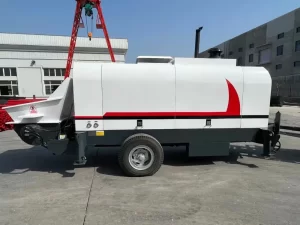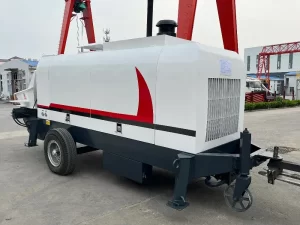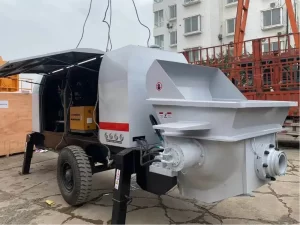
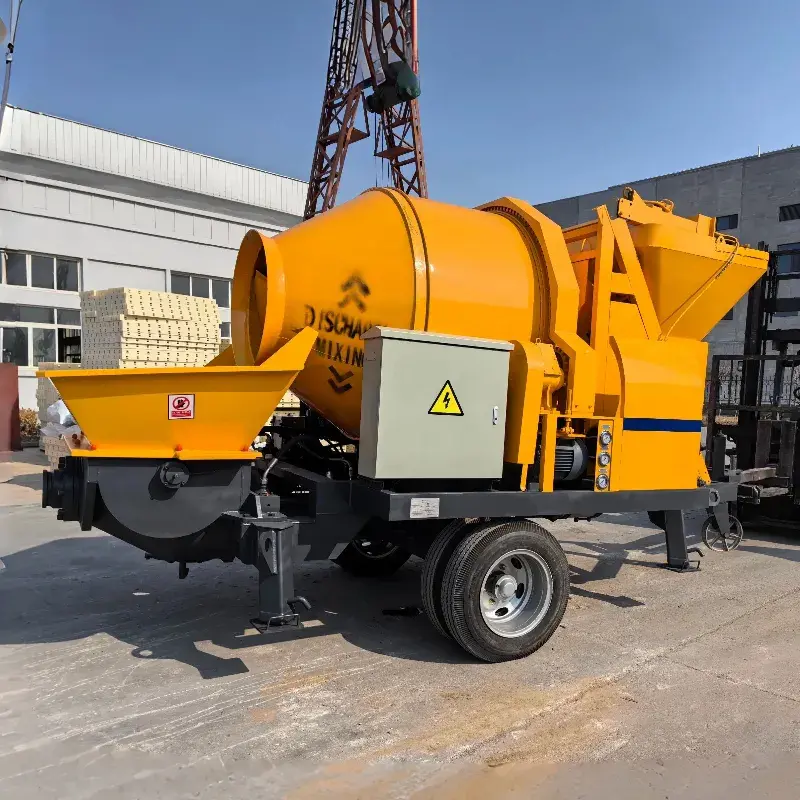
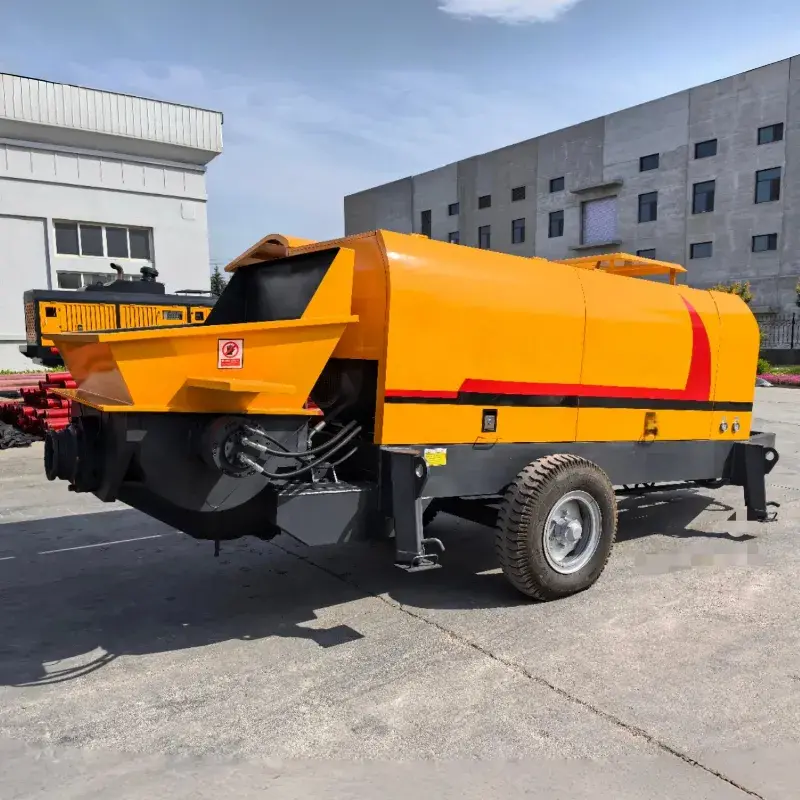
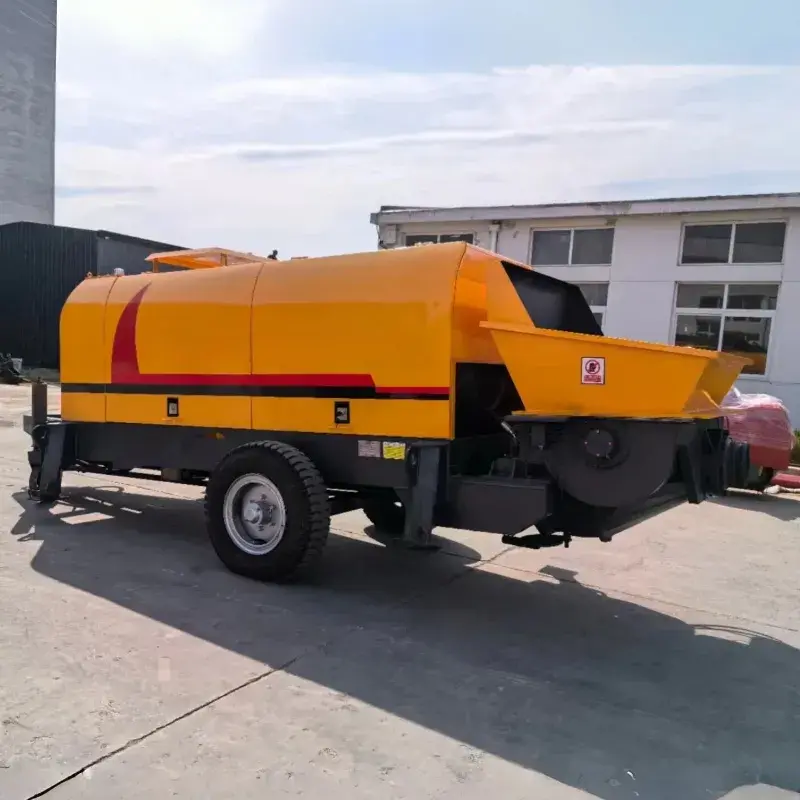
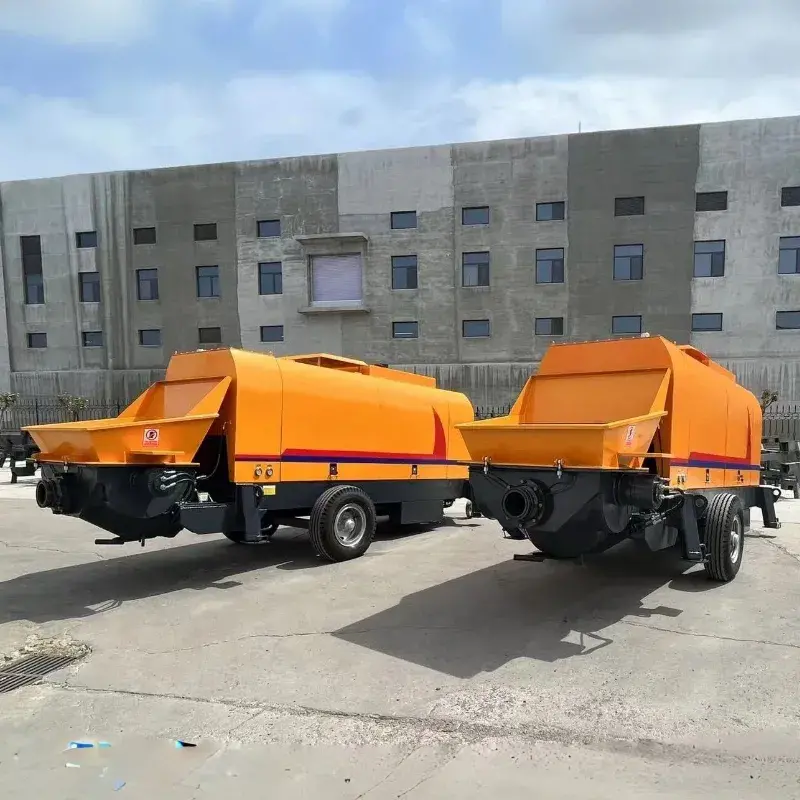
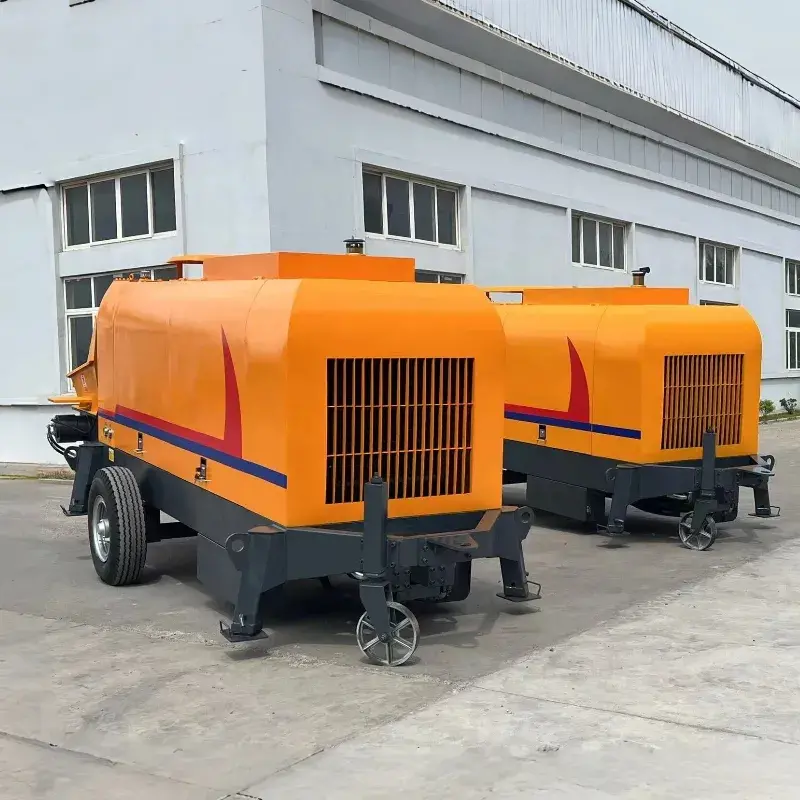
Trailer Concrete Pump
Model: HBT40,HBT50,HBT60,HBT80,HBT90;
HBTS40,HBTS50,HBTS60,HBTS80,HBTS90
Max. Theo.Pumping Capacity(m³/h): 40–90
Max. Aggregate Diameter(mm): 40–50
Conveying Distance (Vertical/Level)(m):80/300-160/800
The concrete pump is a concrete pumping and conveying equipment, available in both electric and diesel types. It is widely used in urban construction, bridge construction, power and other energy facilities, and other building projects. A concrete pump is a highly efficient and flexible concrete conveying device, widely used in various construction and infrastructure projects.
Introduction
The concrete pump is a concrete pumping and conveying equipment, available in both electric and diesel types. It is widely used in urban construction, bridge construction, power and other energy facilities, and other building projects. A concrete pump is a highly efficient and flexible concrete conveying device, widely used in various construction and infrastructure projects.
Main Components of Trailer Concrete Pump
The electric concrete pump is mainly composed of a radiator, a motor, a control system, a hydraulic oil pump, a lubrication system, a sealing system, a mobile frame, a concrete pipe and accessories.
(The diesel engine-powered concrete pump is mainly composed of a diesel engine, a control system, a hydraulic oil pump, a lubrication system, a sealing system, a mobile frame, a concrete pipe and accessories.)
Hopper: used to load concrete.
Hydraulic system: including hydraulic pumps, hydraulic cylinders and valves, etc., used to provide power and control.
Concrete cylinder: used to store and transport concrete.
Distribution valve: used to control the suction and discharge of concrete.
Delivery pipe: used to transport concrete to a designated location.
Control system: used to control the pumping process to ensure the accuracy and safety of the operation.
Motor: provides power to drive the hydraulic system.
(Diesel engine: provides power to drive the hydraulic system.)

Technical Specification
| Model | HBT40 | HBT50 | HBT60 | HBT80 | HBT90 | ||
|---|---|---|---|---|---|---|---|
| Max. Theoretic capacity(m³/h) | 40 | 50 | 60/46 | 85/50 | 90/55 | ||
| Max, Theoretic pressure(Mpa) | 10 | 12 | 13/6.3 | 15.7/8.6 | 18/9.3 | ||
| Power type | Motor | ||||||
| Motor engine power(kw) | 45 | 55 | 90 | 110 | 110 | ||
| Maximum vertical distance(mm) | 120 | 150 | 200 | 250 | 300 | ||
| Maximum horizontal distance(mm) | 250 | 300 | 500 | 800 | 1000 | ||
| Disribution valve type | S valve | S valve | S valve | S valve | S valve | ||
| Hydraulic oil circuit type | Open Circuit |
||||||
| Specification of concrete cylinder(mm) | Ø160× 1000 |
Ø180× 1200 |
Ø200× 1800 |
Ø200× 1800 |
Ø200× 1800 |
||
| Specification of main oil cylinder(mm) | Ø100× 1000 |
Ø125× 1200 |
Ø140× 1800 |
Ø140× 1800 |
Ø140× 1800 |
||
| Oil tank capacity(L) | 300 | 300 | 420 | 420 | 580 | ||
| Hopper capacity(L) | 600 | 600 | 600 | 600 | 800 | ||
| Max. Aggregate diameter(mm) | Slick scree: 40 | Slick scree: 40 | Slick scree: 50 | Slick scree: 50 | Slick scree: 50 | ||
| Scree: 30 | Scree: 30 | Scree: 40 | Scree: 40 | Scree: 40 | |||
| Dimension (LxWxH)(mm) | 4500×1750×1600 | 4800×1800×1650 | 5800×2000×1750 | 5800×2000×1800 | 6000×2000×1800 | ||
| Overall weight(kg) | 3200 | 3500 | 5500 | 5800 | 6500 | ||
| Pulling speed(km/h) | ≤8 | ≤8 | ≤8 | ≤8 | ≤8 | ||
| Model | HBTS40 | HBTS50 | HBTS60 | HBTS80 | HBTS90 | ||
| Max. Theoretic capacity(m³/h) | 40 | 50 | 60/46 | 85/50 | 90/55 | ||
| Max, Theoretic pressure(Mpa) | 10 | 12 | 13/6.3 | 15.7/8.6 | 18/9.3 | ||
| Power type | Diesel | ||||||
| Motor engine power(kw) | 66 | 82 | 129 | 176 | 176 | ||
| Maximum vertical distance(mm) | 120 | 150 | 200 | 250 | 300 | ||
| Maximum horizontal distance(mm) | 250 | 300 | 500 | 800 | 1000 | ||
| Disribution valve type | S valve | S valve | S valve | S valve | S valve | ||
| Hydraulic oil circuit type | Open Circuit | ||||||
| Specification of concrete cylinder(mm) | Ø160× 1000 |
Ø180× 1200 |
Ø200× 1800 |
Ø200× 1800 |
Ø200× 1800 |
||
| Specification of main oil cylinder(mm) | Ø100× 1000 |
Ø125× 1200 |
Ø140× 1800 |
Ø140× 1800 |
Ø140× 1800 |
||
| Oil tank capacity(L) | 300 | 300 | 420 | 420 | 580 | ||
| Hopper capacity(L) | 600 | 600 | 600 | 600 | 800 | ||
| Max. Aggregate diameter(mm) | Slick scree: 40 | Slick scree: 40 | Slick scree: 50 | Slick scree: 50 | Slick scree: 50 | ||
| Scree: 30 | Scree: 30 | Scree: 40 | Scree: 40 | Scree: 40 | |||
| Dimension (LxWxH)(mm) | 4500×1750×1600 | 4800×1800×1650 | 5800×2000×1750 | 5800×2000×1800 | 6000×2000×1800 | ||
| Overall weight(kg) | 3200 | 3800 | 5800 | 6500 | 6800 | ||
| Pulling speed(km/h) | ≤8 | ≤8 | ≤8 | ≤8 | ≤8 | ||
Application
Construction sites – including residential buildings, commercial buildings, roads, bridges, etc.
Tunnels and underground projects – such as subway tunnels, underground parking lots, etc.
Water conservancy projects – such as dams, river management, etc.
Other occasions where concrete transportation is required – such as prefabricated component production, concrete pouring, etc.